
The Science-Backed Breath for Instant Calm
Discover how the physiological sigh can reduce stress, improve mood, and calm your nervous system in minutes with a simple science-backed breathing method.

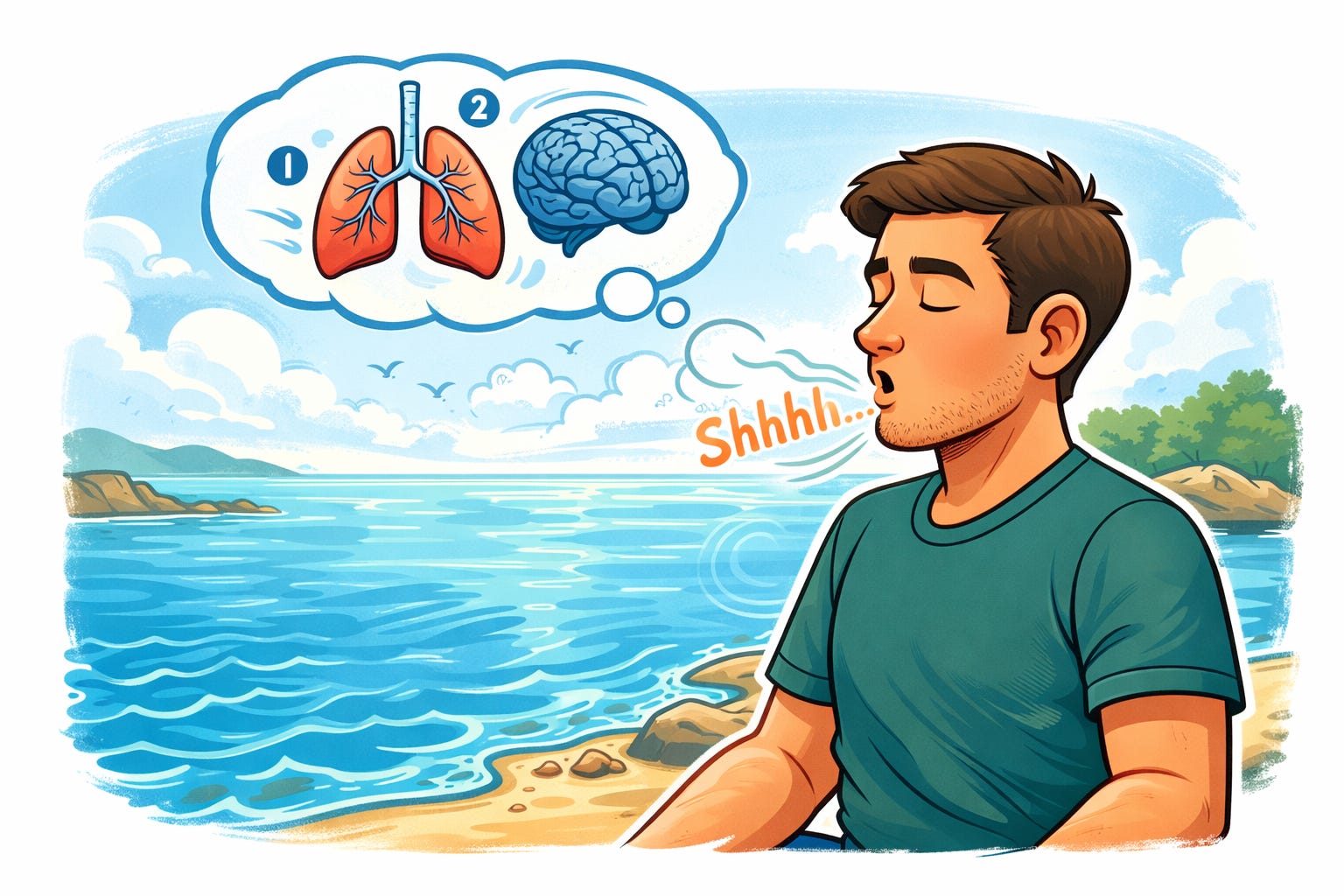
We often look for mood-boosting “hacks” in expensive supplements or complex routines, but one of the most powerful, science-backed tools for emotional regulation is already built into your biology.
It’s called the Physiological Sigh.
While most people associate sighing with frustration, a specific, intentional version of this breath has been proven to “reset” the nervous system faster than almost any other mindfulness practice.
The Science: Why Your Brain Loves a “Double Inhale”
Our emotional state is tethered to our physiology—specifically the balance of carbon dioxide (CO2) and oxygen in our bloodstream. When we are stressed or anxious, the tiny air sacs in our lungs (alveoli) can collapse, causing CO2 to build up. This buildup sends a panic signal to the brain, heightening your heart rate and fueling feelings of dread.
A landmark 2023 study from Stanford Medicine, led by neurobiologist Andrew Huberman and psychiatrist David Spiegel, compared several breathing techniques and mindfulness meditation.1 Their findings were remarkable:
Immediate relief: The “Physiological Sigh” (or cyclic sighing) was the most effective at lowering self-reported anxiety and improving mood.
Superior to meditation: While five minutes of daily meditation is beneficial, five minutes of cyclic sighing resulted in a significantly greater increase in positive affect (feelings of energy, joy, and peacefulness).1,2
How to Perform the Physiological Sigh
This technique is effective because the “double inhale” reinflates the collapsed alveoli, allowing for a much more efficient offloading of CO2 during the long exhale.
The first inhale: Take a deep, sharp breath in through your nose, filling your lungs as much as possible.
The second “top-off” inhale: Immediately take a second, shorter sniff of air on top of the first. You’ll feel your chest expand even further.
The long exhale: Slowly release all the air through your mouth. The exhale should be significantly longer than the inhales—think of it as a slow, steady “shhhh” or a literal sigh of relief.
The protocol: Repeat this just 2 to 3 times for an instant reset, or practice it for 5 minutes a day to lower your baseline stress and boost your daily mood.1
Beyond the Breath: The “Blue Space” Phenomenon
If you want to amplify the effect of the physiological sigh, do it near water. Recent 2024 and 2025 research has solidified the concept of “Blue Space Therapy.”
Studies show that spending just 20 minutes near “blue spaces”—beaches, rivers, lakes, or even urban fountains—lowers cortisol (the stress hormone) and boosts serotonin more effectively than walking in a purely urban environment.3,4
The dynamic, rhythmic movement of water encourages what psychologists call “soft fascination,” a state where the brain is effortlessly engaged but not taxed, allowing for deep emotional recovery.5
Summary
The quick fix: Use the Physiological Sigh (double inhale, long exhale) to offload CO2 and calm the vagus nerve instantly.
The long-term shift: Aim for 20 minutes of “Blue Space” exposure weekly to maintain a higher baseline of positive emotions.
To your zenith within,
Sara Redondo, MD, MS
References:
Balban MY, Neri E, Kuentzel MM, et al. Brief structured respiration practices enhance mood and reduce physiological arousal. Cell Rep Med. 2023;4(1):100895. doi: 10.1016/j.xcrm.2022.100895.
Huberman AD, Spiegel D. The physiological sigh: A neurobiological tool for anxiety and stress management. Stanford Medicine Research. 2023.
Smith N, et al. Blue space exposure and its association with mental health and well-being: A systematic review. Glasgow Caledonian University BlueHealth Initiative. 2024.
Crossley S. My Blue Therapy: Positive Effects of Blue Space on Mental Health. UK Blue Health Report. 2024.
White MP, Elliott LR, Grellier J, et al. Associations between 22 types of nature contact and subjective well-being, for people with and without common mental health problems. Health Place. 2023;82:103032. doi: 10.1016/j.healthplace.2023.103032.