
Grip Strength: A New Marker of Aging
Discover why grip strength is emerging as a key marker of aging, longevity, heart health, and cognitive function—and how to improve it.

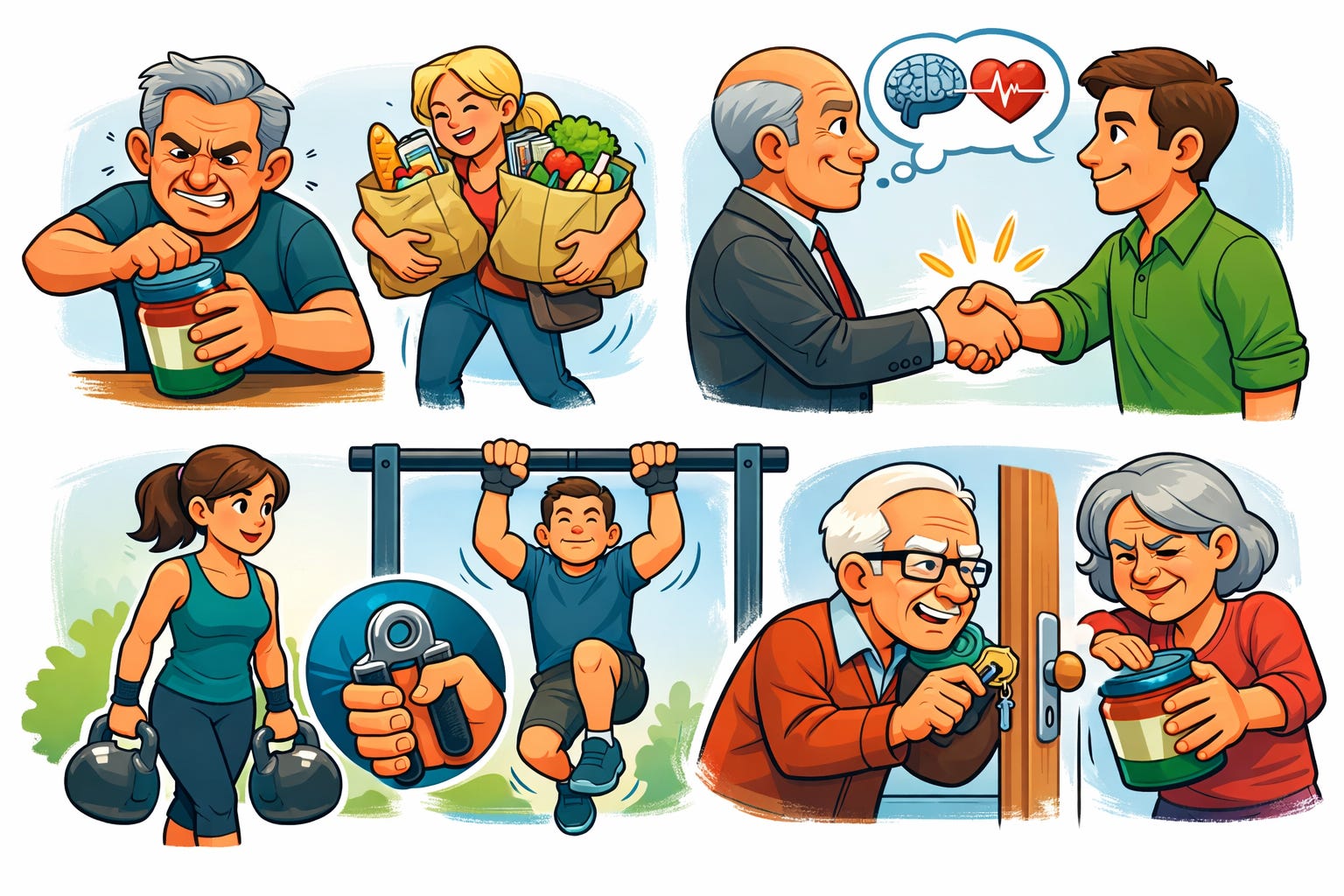
Every time you open a stubborn jar, carry a heavy load of groceries in one trip, or firmly shake a new colleague’s hand, your body is communicating far more than just physical effort. It is sending a quiet, persistent message about your internal biological clock.
In clinical medicine, we are moving toward viewing grip strength not just as a measure of hand function, but as a “vital sign” for the 21st century. It serves as a rapid, non-invasive proxy for your biological age, systemic inflammation, and even your risk of cognitive decline. While we often obsess over blood pressure and cholesterol, the strength of your hands may be one of the most honest reflections of your body’s overall “reserve”—its ability to withstand illness, injury, and the natural rigors of aging.
The Physiology of the Handshake: Why It Matters
Grip strength is more than just muscle mass in the forearms. It is a complex integration of multiple systems working in concert:
Neuromuscular efficiency: To generate a strong grip, the brain must send a clear, rapid electrical signal through the central nervous system to the motor units in the hand. A decline in grip often precedes a decline in the nervous system’s overall integrity.1
The sarcopenia signal: Sarcopenia, the age-related loss of muscle mass and quality, is a primary driver of frailty. Because grip strength correlates so strongly with total body muscle mass, clinicians use it as a “canary in the coal mine” for systemic muscle wasting.2
Endocrine health: Muscle is now recognized as an active endocrine organ. Stronger muscles produce myokines, signaling molecules that help regulate metabolism, reduce inflammation, and even protect brain health.
A Window into Longevity
The correlation between hand strength and long-term health is supported by some of the largest epidemiological studies in history.
1. Mortality and Cardiovascular Disease
A landmark study published in The Lancet (the PURE study) followed nearly 140,000 adults across 17 countries and found that grip strength was a stronger predictor of cardiovascular mortality than systolic blood pressure.3 This is further supported by a comprehensive meta-analysis of community-dwelling populations, which confirmed that lower grip strength is significantly associated with a higher risk of all-cause mortality, cardiovascular disease, and even certain types of cancer.4 For every 5-kilogram decrease in strength, the statistical risk of mortality increases meaningfully, even when accounting for age and lifestyle.
2. The Cognitive Connection
Large-scale data from the UK Biobank has highlighted a fascinating link between the hands and the brain. Adults with lower grip strength show a significantly higher risk of developing all-cause dementia and Alzheimer’s disease.5,6 Researchers believe this may be due to shared pathways: the same vascular and inflammatory issues that weaken muscles may also damage the white matter integrity of the brain.
A Quick Self-Check: Are You Losing Your “Reserve”?
While a clinical hand dynamometer is the gold standard for measurement, you can perform a “real-world” audit of your functional strength. Ask yourself:
The Kitchen Test: Have heavy cast-iron pans or gallon-sized containers become noticeably more difficult to lift with one hand?
The Grocery Challenge: Do you find yourself needing to take frequent breaks when carrying bags from the car that used to feel light?
The Texture Test: Is it becoming harder to generate the “pinch” force needed to turn a key or open a sealed bottle?
If you are over 50 and noticing a decline in these everyday tasks, your body is signaling a loss of muscle “reserve.” The good news is that muscle is highly plastic—it can be reclaimed at almost any age with the right stimulus.
Evidence-Based Pillars of Grip Strength
