

I’ve had more conversations about GLP-1 medications in the past two years than about almost any other topic in my practice. Semaglutide and tirzepatide, sold under brand names like Ozempic, Wegovy, Mounjaro, and Zepbound, the names you’ve heard on every podcast and in every group chat. The weight loss results are real. For many people, these drugs have changed their relationship with food and their health trajectory in ways that diet alone never could.
But there’s something happening alongside that weight loss that almost nobody is told to watch for, and by the time most people notice it, a meaningful amount of damage has already been done.
You’re very likely losing muscle. A lot more of it than you’d expect.
What These Medications Actually Are
GLP-1 (glucagon-like peptide-1) is a hormone your gut already makes every time you eat. Within minutes of a meal, cells in your intestine release GLP-1 to tell your brain you’re full, slow down digestion, and help regulate blood sugar. The problem is that this natural signal is short-lived. It fades within minutes, which is part of why natural fullness doesn’t last very long.
These medications are, essentially, a long-acting copy of that same signal. Think of it like the difference between a smoke detector with a battery that dies in a day and one engineered to last a year. The molecule your body already produces is the smoke detector with the dying battery. Semaglutide (Ozempic, Wegovy) and tirzepatide (Mounjaro, Zepbound) are engineered versions built to keep transmitting that same fullness signal for an entire week instead of a few minutes.
That’s the whole mechanism. It takes a fullness signal you already have and turns the volume up, keeping it turned up for days at a time instead of minutes.
What the Trials Actually Found About GLP-1 and Muscle Loss
When semaglutide (Ozempic, Wegovy) and tirzepatide (Mounjaro, Zepbound) were tested in their major clinical trials, researchers didn’t just track the number on the scale. They used DEXA scans, the same imaging technology that measures bone density, to track exactly what kind of weight was coming off: fat, or lean tissue.
The results were more concerning than most people realize. In the STEP-1 trial of semaglutide, of the total weight participants lost, 45% of it was lean mass.¹ Not fat. Muscle, organ tissue, and other lean components of the body. In the SURMOUNT-1 trial of tirzepatide, that figure was lower but still substantial: about 26% of total weight lost was lean mass.¹
To put that in plain terms: if you lose 40 pounds (18kg) on one of these medications without doing anything specific to protect your muscle, somewhere between 10 and 18 pounds (4.5 to 8kg) of that loss could be muscle, not fat.
This matters more than it might sound like at first. Muscle does far more than let you carry groceries or open jars. It’s one of the most metabolically active tissues in the body, absorbing most of the glucose from your last meal and helping set your resting metabolic rate, so the less muscle you have, the fewer calories you burn just existing. It also has a direct line to how independently you’ll move through your 60s, 70s, and 80s.
Losing a meaningful amount of it while losing weight is a trade-off most people were never told they were making.
Why GLP-1 Drugs Cause Muscle Loss
GLP-1 medications work primarily by suppressing appetite. You eat dramatically less, and your body responds the way it always responds to a significant calorie deficit: it starts breaking down tissue for energy. Some of that tissue is fat, which is the intended effect. But without a strong enough signal telling your body to specifically protect muscle, a portion of what gets broken down is lean tissue too.
The body doesn’t automatically know to preserve muscle during rapid weight loss. It has to be given a reason to. Two things provide that reason: enough dietary protein, and a regular signal to your muscles that they’re still needed, which comes from resistance training.
The problem is that GLP-1 medications often suppress appetite so completely that people are barely eating enough food in general, let alone enough protein specifically. A medication that makes you not want to eat much of anything is, by its nature, working against the exact strategy that would protect your muscle while you lose weight.
This is precisely the gap a 2025 international consensus statement on GLP-1 therapy was written to address.² The recommendation from that expert working group is clear: protein intake above 1.2g per kilogram of body weight per day, spread evenly across meals, combined with regular resistance training.² Without that combination, the muscle loss documented in the clinical trials becomes the default outcome rather than something you actively prevented.
A separate joint advisory from four major nutrition and obesity medicine organizations reached the same conclusion: preserving muscle and bone mass during GLP-1 therapy requires deliberate attention to both protein intake and resistance training, because the medication itself won’t manage that balance for you.³
Who’s Most at Risk for Muscle Loss on GLP-1
Not everyone loses the same amount of muscle on these medications, and knowing where you fall on that spectrum matters.
A growing body of clinical review literature has started mapping out who’s most vulnerable to accelerated muscle loss on these medications: older adults, people who are sedentary, people whose protein intake is already low, and anyone losing weight unusually fast.⁴ These factors compound. An older adult who’s also sedentary and losing weight quickly on a high dose is carrying a meaningfully different risk than a younger, active person losing weight more gradually.
Age deserves particular attention here. Muscle mass and strength are already declining gradually for most adults from their 30s onward, and that decline accelerates after 50. Someone starting GLP-1 therapy later in life is starting from a smaller reserve of muscle to begin with, which means the same percentage of lean mass lost carries a larger functional cost. Older adults also tend to need more dietary protein per meal to trigger the same muscle-building response that a younger person gets from a smaller amount, a phenomenon called anabolic resistance.
The rate of weight loss matters just as much as who you are. Losing weight very quickly, whether from a higher dose or simply responding strongly to the medication, leaves less time for the body to adapt and protect muscle along the way. This is one of the reasons a slower, steadier approach, even when faster is medically possible, is often the safer one for long-term muscle health.
Cooking With Joy While Protecting Your Muscle
If you’re currently on a GLP-1 medication, or considering starting one, the takeaway isn’t to avoid these drugs. For many people, particularly those with significant metabolic disease risk, the benefits are substantial and well documented. The takeaway is that two people can lose the exact same amount of weight on these medications and end up in very different places: one with a smaller body that still has its strength and muscle, the other with a smaller body that’s lost some of both. The number on the scale won’t tell you which one you are. Only a muscle preservation strategy will.
Food is one half of that strategy, alongside resistance training, and it’s the half most people get wrong, because a much smaller appetite makes it genuinely harder to get enough protein in. The instinct most people fall back on is to make up the gap with protein shakes and bland, joyless meals they’re simply enduring. It doesn’t have to be that way. Protecting your muscle on these medications can mean real food eaten with real pleasure.
That’s exactly the gap I wrote The Complete GLP-1 Cookbook for Effective Weight Loss with Joy to close. Joy is the whole point of this cookbook while getting the protein you need to protect your muscles. Every recipe is carefully built to be eaten with pleasure, from energizing breakfasts and creamy smoothies to refreshing salads, feel-good curries, nourish bowls, and guilt-free desserts.
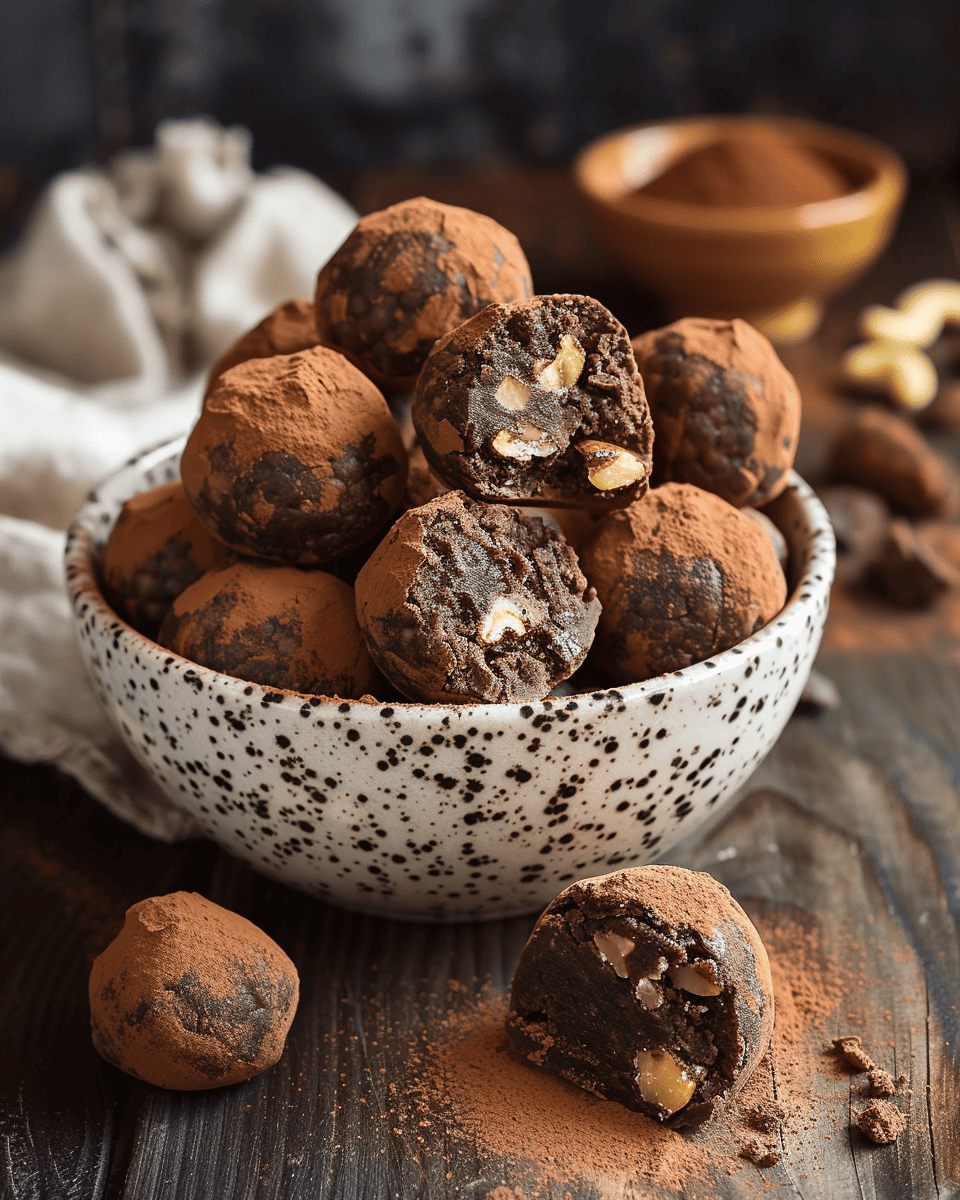
Page 89 is one of my favorite proofs of that: Chocolate Fudge Brownie Bites. It’s become one of those recipes my whole family asks for, whether or not anyone at the table is on a GLP-1 medication. Here's the recipe so you can try it yourself.
Servings: 5 (4 bites each)
Prep time: 15 minutes
Chill time: 15 minutes
Ingredients:
1 heaping cup soft Medjool dates, pits removed
1 cup walnuts
½ cup cashews
¼ cup cacao powder
½ cup chocolate or vanilla whey protein
¼ cup hemp seeds
⅛ tsp salt
2 Tbsp chopped dark chocolate (optional)
Directions:
Add dates, walnuts, cashews, cacao, whey protein, hemp seeds, and salt to a food processor. Blend until the mixture is thick and fudgy, scraping down the sides as needed.
Add the chopped dark chocolate and pulse a few times to distribute.
Roll the mixture into 20 small balls.
Chill in the fridge for at least 15 minutes (or freeze) before serving.
To your zenith within,
Sara Redondo, MD, MS
P.S. Are you currently on a GLP-1 medication, and if so, has anyone talked to you about protecting your muscle while you lose weight? Let me know in the comments!
References:
Neeland IJ, Linge J, Birkenfeld AL. Changes in lean body mass with glucagon-like peptide-1-based therapies and mitigation strategies. Diabetes Obes Metab. 2024;26(Suppl 4):16-27. doi:10.1111/dom.15728
Noronha JC, Van Gaal LF, Neeland IJ, Fitch A, Pfeiffer AFH, Chiavaroli L, et al. Optimizing GLP-1 therapies for obesity and diabetes management. Obes Pillars. 2025;16:100222. doi:10.1016/j.obpill.2025.100222
Mozaffarian D, Agarwal M, Aggarwal M, Alexander L, Apovian CM, Bindlish S, et al. Nutritional priorities to support GLP-1 therapy for obesity: a joint advisory from the American College of Lifestyle Medicine, the American Society for Nutrition, the Obesity Medicine Association, and the Obesity Society. Obes Pillars. 2025;15:100181. doi:10.1016/j.obpill.2025.100181
Memel Z, Gold SL, Pearlman M, Muratore A, Martindale R. Impact of GLP-1 receptor agonist therapy in patients high risk for sarcopenia. Curr Nutr Rep. 2025;14(1):63. doi:10.1007/s13668-025-00649-w
I have always been an athlete and competed as a swimmer since I was 11. I added triathlon when I was fifty (now 71) and have consistently weight trained since I was 40. I lost 70 pounds and DEXA scans have shown that I have lost only 10 pounds of muscle with 55-60 pounds of fat lost. I am also a dietitian so am well aware, without too much tracking, of what I am eating. I emphasize protein, but overall, I only eat things that I really like and enjoy. Otherwise what’s the point ?
Thank you for sharing this! Joy in eating is so important. For decades, it was thought that it would lead to overeating, but studies show that framing food around pleasure and sensory experiences actually lead to healthier dietary choices (Bedard, 2020).