
The Shift to Heart Disease Prevention
Discover how the Framingham Heart Study transformed heart health and the proven strategies to prevent cardiovascular disease naturally.

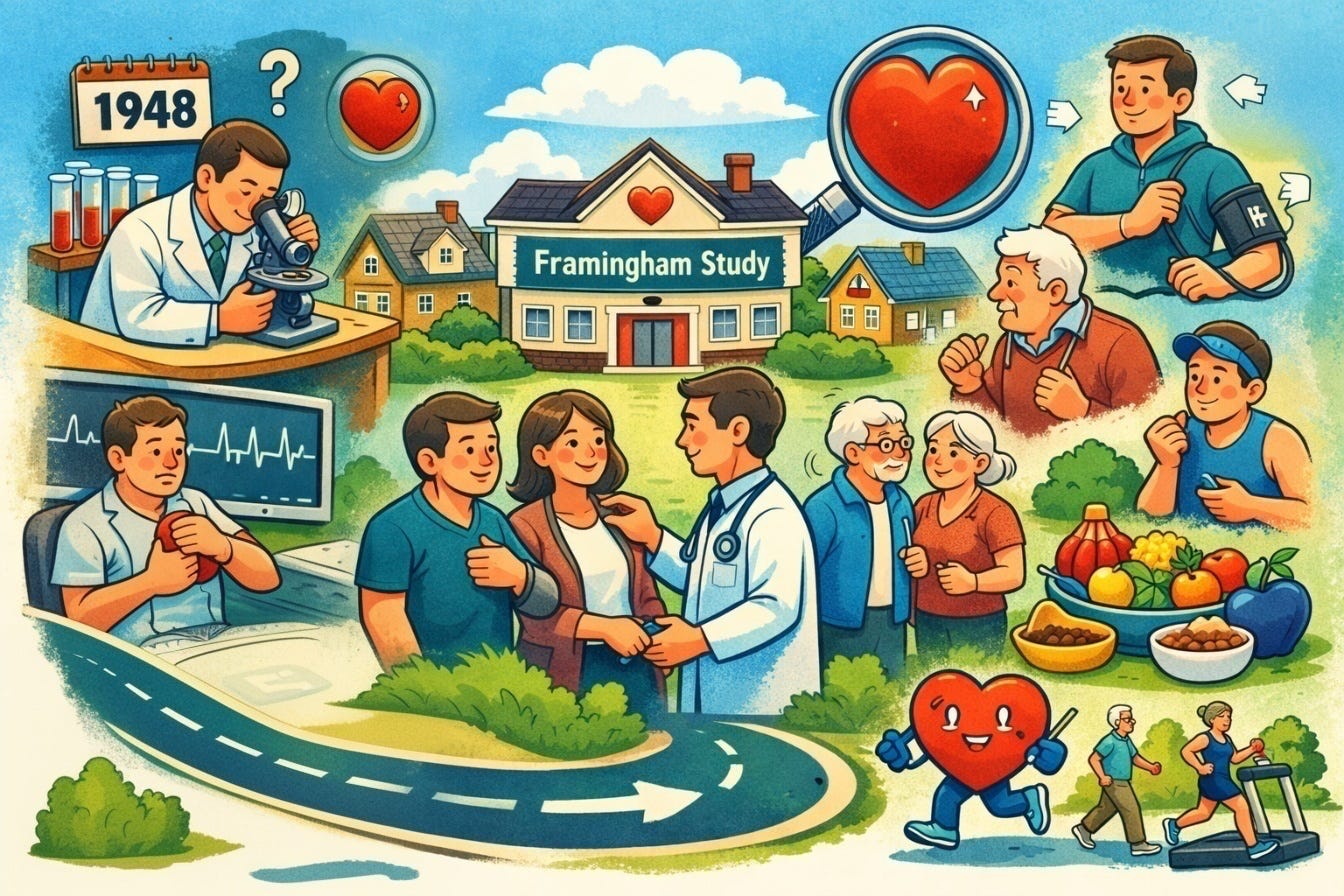
For decades, modern medicine operated on a “wait and see” model. We waited for the chest pain to start, for the artery to clog, or for the heart to fail before we intervened.
This reactive stance changed forever in 1948 with the launch of the Framingham Heart Study, a monumental piece of research that shifted the entire paradigm of human health from treatment to prevention.
Before Framingham, the term “risk factor” didn’t even exist in the medical lexicon. We now take for granted that high blood pressure or smoking leads to heart disease, but in the mid-20th century, these were viewed as largely mysterious or even “natural” parts of aging.
The Study That Redefined Longevity
Launched in a small town in Massachusetts, the Framingham Heart Study followed 5,209 men and women to observe the development of cardiovascular disease (CVD) over time.1 This study provided the first definitive evidence that:
Hypertension (high blood pressure) and Hypercholesterolemia (high cholesterol) were not just numbers, but direct precursors to heart attacks.2
Lifestyle choices, such as smoking and physical inactivity, were primary drivers of mortality.3
Diabetes acted as a significant accelerator of vascular damage.4
Because of Framingham, we stopped viewing heart disease as an inevitable stroke of bad luck and started seeing it as a predictable outcome of specific, modifiable behaviors.
The Prevention Gap: Why Knowing Isn’t Doing
Despite decades of data, heart disease remains the leading cause of death worldwide.
The gap between knowledge and action is where most of our health is lost. We know the risk factors, but we often fail to implement the “how” in a way that creates lasting physiological change.
If you want to move beyond the statistics and truly fortify your cardiovascular system, you need a protocol that addresses the “Big Three” of Framingham.
